Monday, July 12, 2010

Thursday July 8, 2010

7:00 AM: Breakfast

8:00 – 11:30AM: Tour of the Mangrove, Dump, and Sewage Treatment Plant

We traveled from the water to the mangroves to the top of the watershed. It was an illustration of the ecological communities, stressors, and problems in the local area. Our tour demonstrated both high- and low-tech solutions. The trip through the marsh of the sewage treatment plant was the most unpleasant envirovet experience yet…I got destroyed by fire-ants!

12:00 PM: Lunch

1:00 – 2:00 PM: Shrimp/Prawns

Presenter: Dr. Davidson

Davidson explained the form, function, and health problems of shrimp/prawns. He also touched upon the management of ecosystems for their health and long-term sustainability.

2:00 – 3:00 PM: Horseshoe Crabs

Presenter: Dr. Matt Allender, University of Illinois CVM

Horseshoe Crabs are a keystone species in their environment and used extensively in the research of endotoxins. Allender gave an overview of the form, function, and health problems for this species. He also went over humane treatment and methods for euthanasia of this species.

3:00 – 4:00 PM: Sea Urchins

Presenter: Dr. Haskell

Haskell is a leading expert on Sea Urchins. He discussed their form, function, and health problems. Much like the previous lectures he also explained the management of ecosystem, humane treatment, and euthanasia.

4:00 – 5:00 PM: Invasive Species, Impacts on Aquaculture Systems, Management and Prevention.

Presenter: Dr. Davidson

5:00 – 6:00 PM: dinner

6:00 – 8:30 PM: Laboratory

We got hands on experience in the comparative anatomy and bleeding of aquatic invertebrates. The lab also included hematology euthanasia, necropsy, morphology, and health assessments.

Evening:

It was past 9:00 by the time we got back to the hotel. Instead of heading to bed we went to the pool to eat some of our remaining patients (oysters). We had a few beers, ate oysters, and socialized with the faculty.

Friday, July 09, 2010

Wednesday July 7, 2010

6:30 AM: Breakfast

These long nights and early mornings are starting to take their toll. I am feeling a bit under the weather and totally exhausted all the time…

7:30 – 8:00 AM: Morning Exercise Overview

Presenters: Mrs. Nelson, Drs. Hanisak, Beasley, and Haskell

The instructors went over what we will be looking for, seeing, and measuring. They covered how and why we make these observations and assessments.

8:00 AM – 12:00 PM: Sampling

We went into the field to participate in environmental and ecological assessments and sampling. We sampled two sights to compare water quality parameters, plankoton, nekton, macrophytes, and macro-invertebrates in the water column and benthic zones. We also sampled water and sediment for toxologic analysis. Unfortunately, we were deep into the water so I could not bring my camera L

12:00 PM: Lunch

While eating I got lots of little bites from midges.

1:00 – 3:00 PM: Husbandry and Examination

The group of instructors took us through husbandy and examination methods for marine specimens collected from the field.

3:00 – 4:00 PM: Invertebrate Aquaculture

Presenter: Dr. Jeff Davidson, Atlantic Veterinary College, Prince Edward Island, Canada

Davidson gave an overview of the open and semi-open aquaculture systems used to produce invertebrates for human food. The lecture focused on different approaches used amon species and examined some of the infectioius and toxicologic diseases in production systems.

4:00 – 5:00 PM: Bivalve Pathogenesis

Presenter: Dr. Davidson

Davidson explained the form, function and some of the major health problems of bivalves. We also examined techniques for the management of ecosystems for their health and long-term sustainability.

5:00 – 6:00 PM: Dinner

Evening: Pool Party

After class almost everyone went to the pool for several hours for swimming and socializing. By the time were done I was exhausted.

Thursday, July 08, 2010

Tuesday July 6, 2010 CORAL ECOSYSTEMS

I am trying to catch up on the blog so lecture descriptions will be short!

8:00 – 9:00 AM: Coral Structure, Nutrition, and Ecology

Presenter: Dr. Josh Voss, Marine Science Department, FAU/HBOI

Voss described the basics behind coral reefs and the organisms that create these unique habitats.

9:00 – 10:00 AM: Coral Hatchery Tour

Presenter: Mr. Dustin Dorton, President, Oceans, Reefs and Aquariums, FAU/HBOI

Dorton gave us a tour of the million dollar coral hatchery. The coral are raised in regulated pools and grown to sizes that can be sold to aquarium stores. The project has reduced the number of coral taken from their native habitat.

10:00 – 11:00 AM: Broad overview of Coral Diseases

Presenter: Dr. Voss Nutrients, algae, cyanobacteria, other bacteria, viruses, toxins, elements, manmade chemicals, elevated temperatures were discussed. Their sources and their individual and interactive effets on coral species and on reef health/sustainability were discussed.

11:00 – 12:00 PM: Assessing Coral Disease

Presenter: Dr. Voss

Molecular methods used in diagnostic and mechanistic studies of coral disease were overviewed.

12:00 PM: Lunch

1:00 – 2:00 PM: Acidification of Marine Environments

Presenter: Dr. Stamper

Stamper discussed the extent, trends, and projected impacts of oceanic acidification.

2:00 – 4:00 PM: Smithsonian Marine Ecosystem Exhibit Tour

Presenter: Smithsonian Scientists

Tour included multiple species of coral in mixed species exhibits, featuring the Oculina deep water coral, aspects of ecology and biology, as well as saltwater aquarium management for displays and research.

4:30 – 5:30 PM: The Future of Coral Reefs

Dr. Hernandez-Delgado

In his lecture, Hernandez-Delgado examined the negative effect of climate change on coral reefs. Long-term impacts, lessons learned, and management alternatives were discussed.

5:30 – 6:30 PM: Dinner

6:30 – 8:30 PM: Coral Reef Rehabilitation

Presenters: Dr. Hernandez-Delgado and Dr. Stamper

The after dinner lecture examined how coral reefs can be recovered and highlighted successful examples that included local community involvement.

Tuesday, July 06, 2010

Monday July 5th, 2010 INTRODUCTION TO HARBOR BRANCH OCEONGRAPHIC INSTITUTE

7:00 – 8:00 AM: Breakfast

We Met in the Education Center for the opening breakfast.

8:00 – 8:30 am: Formal Welcome to FAU/HBOI

Presenters: Dr. Dennis Hanisak, Director; Mrs. Brandy Nelson, educator.

We were told about the history of the intuition, key personnel, and what to expect over the course of our next two weeks here.

8:30 – 10:30 am: Tour

We were shown around the HBOI campus, research vessel, and submarine facility.

10:45 – 12:00 pm: Freshwater and Marine Ecology

Presenter: Dr. Scott Haskell, Veterinary Technology Program, Yuba Community College

Haskel described the basics of watersheds, hydrology, tides, energetics, nutrient flows. He also discussed human uses of water and salt water intrusion. Haskel is a lot of fun and presents with tons of passion and energy.

12:00 pm: Lunch

While eating we were greeted by a Manatee!

1:00 – 3:00 pm: Freshwater and Marine Ecology (continued)

Haskel continued his discussion of the mixing of freshwater and saltwater, where it occurs globally and how salinity and temperatures are affected. He then outlined some of the major factors that structure the biodiversity of the estuarine, coastal and deeper water marine ecosystems from the equator to the poles.

3:00 – 4:00 pm: Water Quality and Microbial Ecology

Presenter: Dr. Andy Stamper, Disney Living Seas

Stamper gave a basic introduction to the complex relationships among aquatic microbes.

4:00 – 6:00 pm: Principles of Ecosystem Management

Presenter: Dr. Rebekah Gibble, US Fish and Wildlife Service

Gibble went over the history of the Everglades and their demise due to explosive population growth and agriculture in Southern Florida. She then described the ecological restoration project of the area.

6:00 – 7:00 pm: Dinner

They continue to feed us well at Envirovet. After being locked inside for much of the day we decided to eat outside but were attacked by midges…

Evening: Evaluations

I got together with a group of students to evaluate the first session of the course. When we were done we sat around and played on the internet until the wee hours of the morning.

Sunday July 4, 2010 FREE DAY

Happy Birthday the USA and to my Roomie Vincint!

8:00 am: Breakfast

10:00 am: Group Meeting

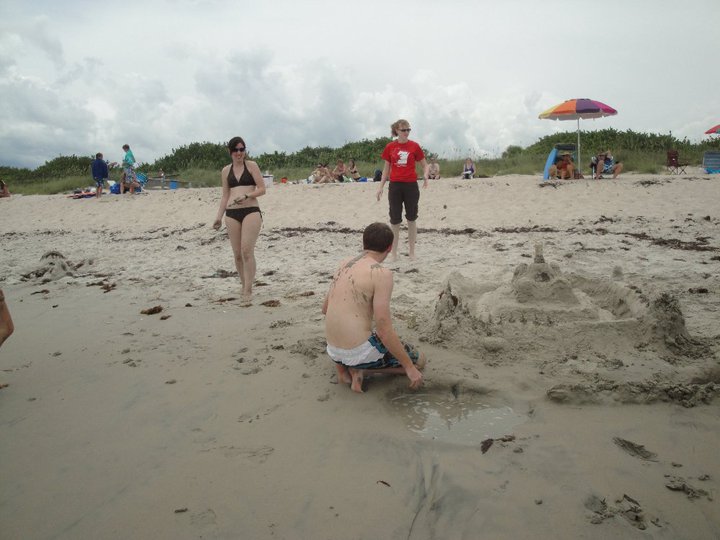
Dr. Beasley gathered us for a group meeting to discuss the options for the days activities. I chose to go on the beach trip. We loaded two vans with towels, snorkel gear, and other beach amenities. On the way we stopped at Wendy’s and the supermarket for food and beer.

The beach was awesome. The water was warm and the waves were fun. Unfortunately, I was having such a good time that I forgot to reapply sunscreen and ended up getting a pretty good burn by the end of the day (please don’t be mad mom!).

5:30 pm: Group Dinner

After a quick shower and some new clothes I loaded into the vans with my fellow Envirovets and we went out to a nice dinner on the beach. It was a lovely meal complimented with a few beers.

7:30 pm: Fireworks

When we were done with dinner we went to the docks to watch the Fort Pierce fireworks show. It was a unique experience for some of the international students but it was not the best show I have ever seen. Perhaps this was because there was a heavy rain during the show.

Saturday July 3, 2010 ST. CATHERINES ISLAND

7:00 am: Breakfast

8:00 - 10:00 am: Field Demonstration: SCI Sea Turtle Nest Protection Program

Instructors: Gayle Bishop, Norton, Segars

We learned about the loggerhead sea turtle nest protection program at St. Catherines and helped to find and relocate a sea turtle nest to higher ground.

10:00: Pack up, pack a box lunch

11:00 am: Depart St. Catherines Island

Afternoon: Tour of the Georgia Sea Turtle Center on Jekyll Island

The Georgia Sea Turtle Center is an AMAZING PLACE. They rehabilitate injured sea-turtles and release them back to the wild. It is set up as a visitor center with information about the turtles. Guests can watch the veterinary staff perform procedures and tour the holding tanks that house massive turtles.

3:00 pm: Drive to Fort Pierce

The six-hour drive actually went by fairly fast. It was a great opportunity to rest on a comfortable buss and catch up with classmates. When we got to our hotel we split into groups of three to share rooms. I will be rooming with Vincent (French Canadian) and Trisha (Normal Canadian) for the next two weeks.


Fri July 2 ST. CATHERINES ISLAND

7:00 am: Breakfast

8:00 - 9:30 am: Field Demonstration: Reptile and Amphibian Capture Techniques

Instructors: Hagen, Andrews, Norton, Segars, Gonyer, Jensen

We observed various traps and techniques for sampling reptile and amphibian populations, and helped biologists check traps set the night before for reptile and amphibian captures. We caught several small alligators, lots of newts and frogs, several crayfish, and some scary looking beetles. Unfortunately, all of this occurred in a hard rain so I did not pack my camera.

10:00 am -12:00 pm: Field Exercise: Telemetry

Instructors: Keith-Lukas, Gilardi, Inman, and Beasley

We used radiotelemetry receivers and antennae to locate troops of lemurs that are free-ranging on St. Catherine's Island. It was super fun to learn how to use this type of equipment.

12:00 pm: Lunch

1:00-1:45 pm: Gopher Tortoise Conservation on St. Catherines Islad

Instructor: Norton

An overview of St. Catherines Island’s translocated gopher tortoise population.

2:00-5:00 pm: Field Exercise: Gopher Tortoise Health Assessment and Conservation

Instructors: Norton, Segars, Hagen, Andrews, Gonyer, Jensen, Greco

We conducted annual health assessments on the St. Catherines Island gopher tortoise population, which was established with a translocation effort from the mainland more than 10 years ago. We learned about diseases of free-ranging tortoises, gopher tortoise ecology and breeding biology, and free-ranging gopher tortoise management in the southeast. I worked with Amelie (with help from Jasper) in conducting the health assessment. Drawing blood was much harder the expected and I think we only got about 0.4 mL before deciding we were putting too much stress on our animal.

4:30 - 6:30 pm: Beach Time!

Kirsten drove us to the sandy beach to play in the warm waters!

6:30 pm: Dinner; evening free

After Dinner I joined a group of undergraduates spending time on the island (including some one from the University of Oregon) to have a few beers before returning the guest house to play Taboo with some of the non-native English speakers…

Monday, July 05, 2010

Thursday July 1 ST. CATHERINES ISLAND

Yesterday we made the trip out to St. Catherines Island off the coast of Georgia. Formerly a breeding island for the Bronx Zoo, the island now houses several troops of free ranging lemurs and is set up as a preserve for native wildlife.

By the time we arrived at the island we had just enough time to claim our rooms before heading to dinner. We were pleasantly surprised to find that the island has several new guest houses and no one was forced to camp in the hot and humid conditions.

7:00 am: Breakfast

8 – 10:00 am: Field Exercise: Avian Capture and Disease Surveillance

Instructors: Jen Hilburn, Brad Winn, Felicia Sanders, Terry Norton, Al Segars, Veronica Greco, Kirsten Gillardi

We got hands-on experience setting up avian mist nets, removing captured birds from nets, and processing captured birds (handling, banding, physical exam, bleeding), and learned how these techniques are used to survey free-ranging bird populations for disease. It was very similar to the techniques I used six years ago in Monteverde when I did my Mountain Robin research project.

10:00 – 11:45 am: Field Demonstration: Shorebird Conservation and Capture

Instructors: Brad Winn, Felicia Sanders, Terry Norton, Jen Hilburn, Veronica Greco

We set up a cannon net and a rocket net in order to learn about how these nets are used to capture shorebirds. These two nets take time to set up and utilize explosives, making them quite loud and intense.

12:00-1:00 pm: Lunch

1:00-2:00 pm: Introduction to Map Reading

Instructor: Tim Keith-Lukas, University of the South

We were taught how to read maps and chart paths, and to use a compass and a hand-held GPS unit. I must say, it was a fairly long and boring lecture.

2:00 - 4:00 pm: Field Exercise: Orienteering

Instructors: Norton, Gilardi, Beasley, Lukas, Segars

We tested our new knowledge of maps and navigational aids by forming teams and going on an ecological "treasure hunt" through the woods. My team consisted of Jocelyn, Nicole, Chuma, Sukuman, and Wilson. Unfortunatley, it was raining when we left so I did not bring my camera. Nevertheless, we managed to navigate from a random position on the island to a tree that serves as a rookery for storks and egrets.

4:30 – 5:30 pm: Reptile trapping

Instructors: Kimberly Andrews, Chris Hagen, Jess Gonyer, and John Jensen

We got to help Andrews set traps for reptiles and amphibians.

6:00 pm: Dinner

7:30 - 8:30 pm: Cultural History of St. Catherines Island

Instructor: Royce Hayes (St. Catherines Island)

Superintendent Hayes took us to an archaeological site on the island and told us about the rich history of the settlement of St. Catherine’s Island hundreds of years ago. Just as the presentation was finishing it began to downpour. Everyone got soaked on the ride through the jungle back to base camp. It was a super fun ride!

After dinner I went back to the guesthouse and played a card gamed called apples to apples with Kirstens kids and several other Envirovets before heading to bed.